Profile
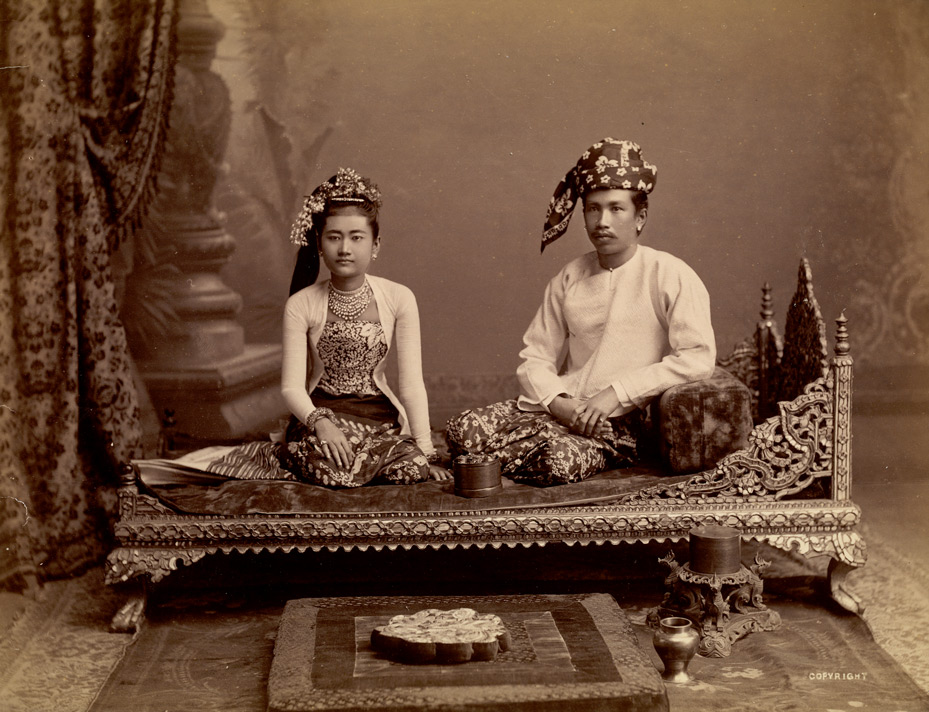
The Bamar (Burmese) are a Sino-Tibetan-speaking ethnic group native to Myanmar, with an estimated population of around 35 million. They primarily inhabit the Irrawaddy River basin, which is central to Myanmar's geography and culture. The Bamar people speak the Burmese language, which serves as the national language and a lingua franca in Myanmar.

Location
The Bamar predominantly live at the confluence of the Irrawaddy, Salween, and Sittaung River valleys in the centre of the country, which roughly encompass the country's seven administrative regions, namely Sagaing, Magwe, Mandalay in Upper Myanmar, as well as Bago, Yangon, Ayeyarwady and Taninthayi Regions in Lower Myanmar. The cultural heartland of the Bamar is called Anya. For 1,100 years, this region was home to a series of Burmese royal capitals.

Shwenandaw Monastery
Shwenandaw Monastery is an historic Buddhist monastery in the city of Mandalay. Known as the Golden Palace, this important building is located in central Myanmar. It was originally part of the Mandalay Palace complex as the royal apartment of a king, but his son moved it outside the palace after his death believing it was haunted by the king's spirit. It later became a monastery. At one time, the building was covered in gold but the gold is mostly inside now.
Taung Kalat
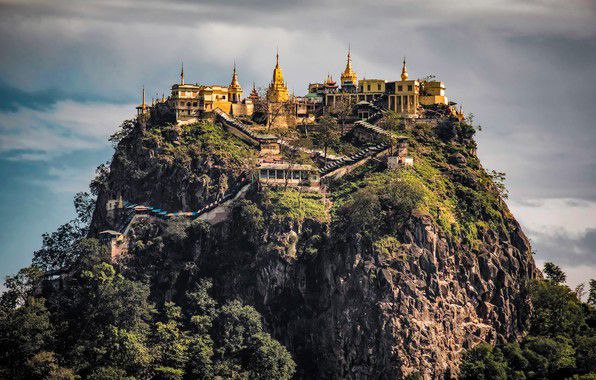
Built atop an extinct volcano plug, the Buddhist monastery of Taung Kalat is one of the most breathtaking sites in Burma. To reach the monastery, visitors must climb the 777 steps to the summit. Along the way are a multitude of Macaque monkeys expecting treats. From the top of Taung Kalat, one can enjoy a panoramic view. One can see the ancient city of Bagan and the massive solitary conical peak of Mount Popa, the volcano that actually caused the creation of the volcanic plug.
Bagan
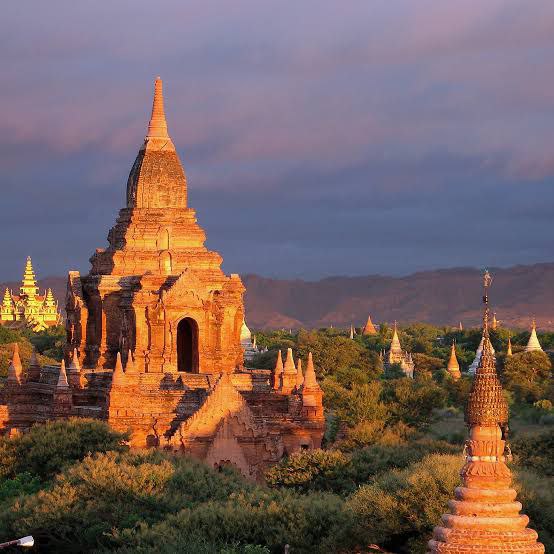
Being one of the best Myanmar tourist spots and one of the most visited places throughout the country, this is undoubtedly the greatest archaeological site on earth that you should never miss when visiting Burma. In early civilization, no less than 10,000 temples, monasteries, stupas, and pagodas were erected within the relatively small area of Bagan. Nowadays, there are about 3000 of them remaining, one close to each other, so you can choose among a wide range of transportation such as bicycle, on foot, buses, tuk-tuk or even a hot air balloon to enjoy a panoramic view of Bagan from above, which is surely an unforgettable experience.
Yangon
The Shwedagon Pagoda is one of the top tourist attractions in Yangon. Locals come here to make offerings and worship. When you visit, you will see different temples corresponding to the days of the astrological week. People make offerings to the temple on the day of their birth.
Another popular attraction is the long-standing Bogyoke Aung San Museum. Aung San Suu Kyi, a former Nobel Peace Prize winner was a prominent figure in Myanmar's development and her father, General Aung San, helped to gain Burmese independence from the British. The museum was home to the Aung San Suu Kyi family and her father before his assassination. A trip here is one of Myanmar's best attractions for modern history lovers.
Culture and Traditions
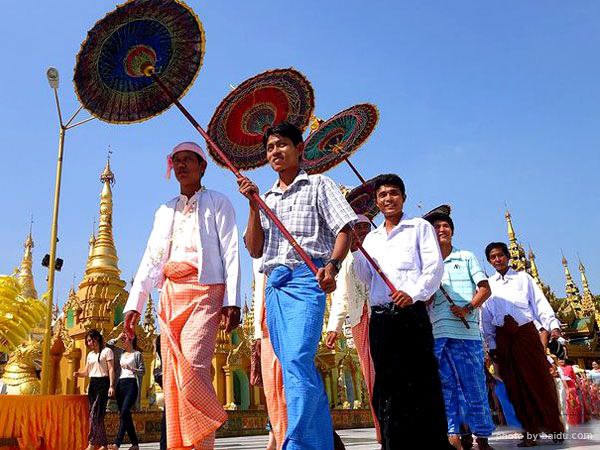
Bamar culture is deeply influenced by Theravada Buddhism, which guides daily life, art, and festivals. The most iconic celebrations include Thingyan (Water Festival) and Thadingyut (Festival of Lights).
Burmese classical music ensembles can be divided into outdoor and indoor ensembles. The outdoor musical ensemble, which was an outdoor ensemble in royal courts used to mark important ceremonial functions like the royal ploughing ceremony. The indoor form is the chamber music ensemble, which basically comprises a female singer accompanied by a traditional ensemble.

Traditional Dress
The Bamar traditionally wear sarongs called longyi, an ankle-length cylindrical skirt that is wrapped at the waist. The modern form of the longyi was popularised during the British colonial period, and replaced the much lengthier paso and htamein of the pre-colonial era. The indigenous acheik silk textile, known for its colorful wave-like patterns, is closely associated with the Bamar. Formal attire for men includes a longyi accompanied by a jacket called taikpon , which similar to the Manchu magua, and a cloth turban called gaung baung . Velvet sandals called gadiba phanat (also called Mandalay phanat), are worn as formal footwear by both men and women.
Thanakha
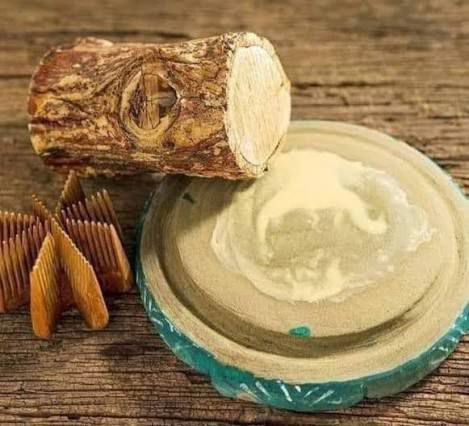
Bamar people of both sexes and all ages also apply thanakha, a paste ground from the fragrant wood of select tree species, on their skin, especially on their faces. In modern times, the practice is now largely confined to women, children, and young, unmarried men. The use of thanakha is not unique to by the Bamar; many other Burmese ethnic groups also utilize this cosmetic. Western makeup and cosmetics have long enjoyed a popularity in urban areas.
Thingyan Water Festival
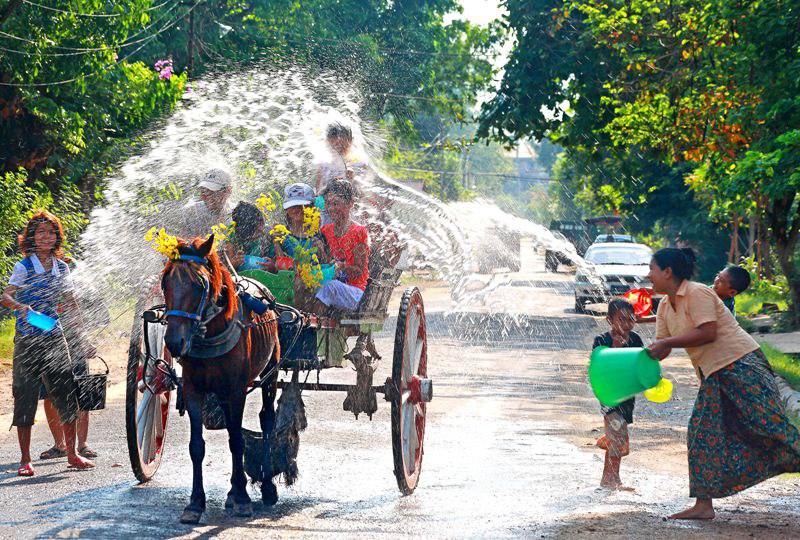
The water festival is the most important amidst the Myanmar water festivals as it marks the onset of a new Burmese year. People get on stages erected on the streets by Bamboos and drench each other in the water. People splash water through pipes from jeeps and trucks, and children enjoy with little water pistols. The monks and elderly are spared though. This festival symbolizes cleansing of the past sins, and captive birds & fishes are also freed during the Thingyan Festival.
Thadingyut Festival Of Lights
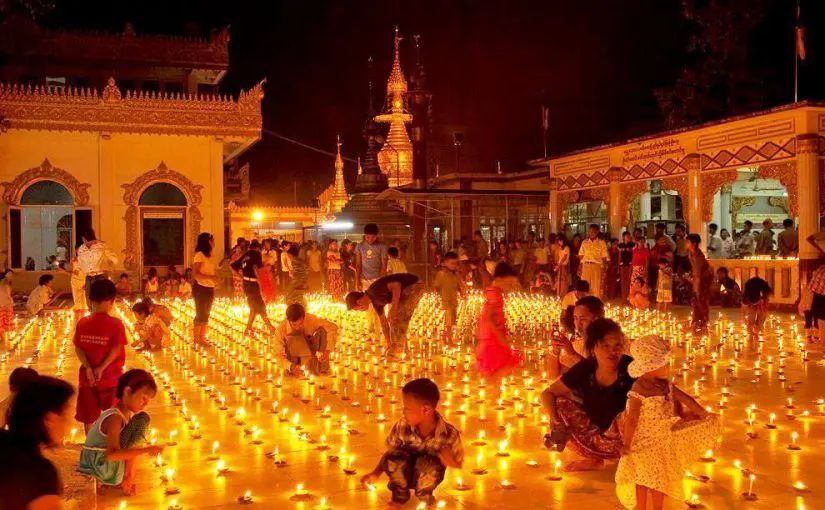
Thadingyut Festival of Lights commemorates with the onset of winter and symbolizes the return of Buddha to paradise from the mortal land. You can enjoy the sight of lightings everywhere or even create your own and offer it in one of the pagodas. The most famous highlight of this Thadingyut Festival is the uncountable number of lanterns or lights that once can spot in the sky.